 English
 You've jumped on the AI content bandwagon. Your blog is cranking out posts faster than ever. But there's a problem: your organic traffic is tanking, your rankings are sliding, and you're wondering what went wrong.
Here's the truth: AI isn't the villain. Generic, cookie-cutter AI content is. When you're publishing the same regurgitated answers as thousands of other websites, Google notices. And it's not impressed.
Let's break down the seven biggest mistakes businesses make with AI-generated blogs and how to fix them before your SEO completely crashes.
Mistake #1: Publishing Unedited AI Drafts
The biggest rookie move? Hitting "publish" on AI-generated content without adding your own insights, voice, or perspective.
Here's what happens: AI tools pull from the same training data. When you ask ChatGPT or any other tool the same question as everyone else, you get similar answers. Google's algorithms are sophisticated enough to detect near-duplicate content across multiple sites: and they penalize it accordingly.
The Fix: Use AI as your research assistant, not your ghostwriter. Generate the outline, pull together initial ideas, then rewrite with your unique angle. Add case studies from your clients, personal anecdotes, local examples, or proprietary data that only you have access to. That's what separates mediocre content from content that ranks.

Mistake #2: Ignoring Google's AI Overviews (And Losing 61% of Your Traffic)
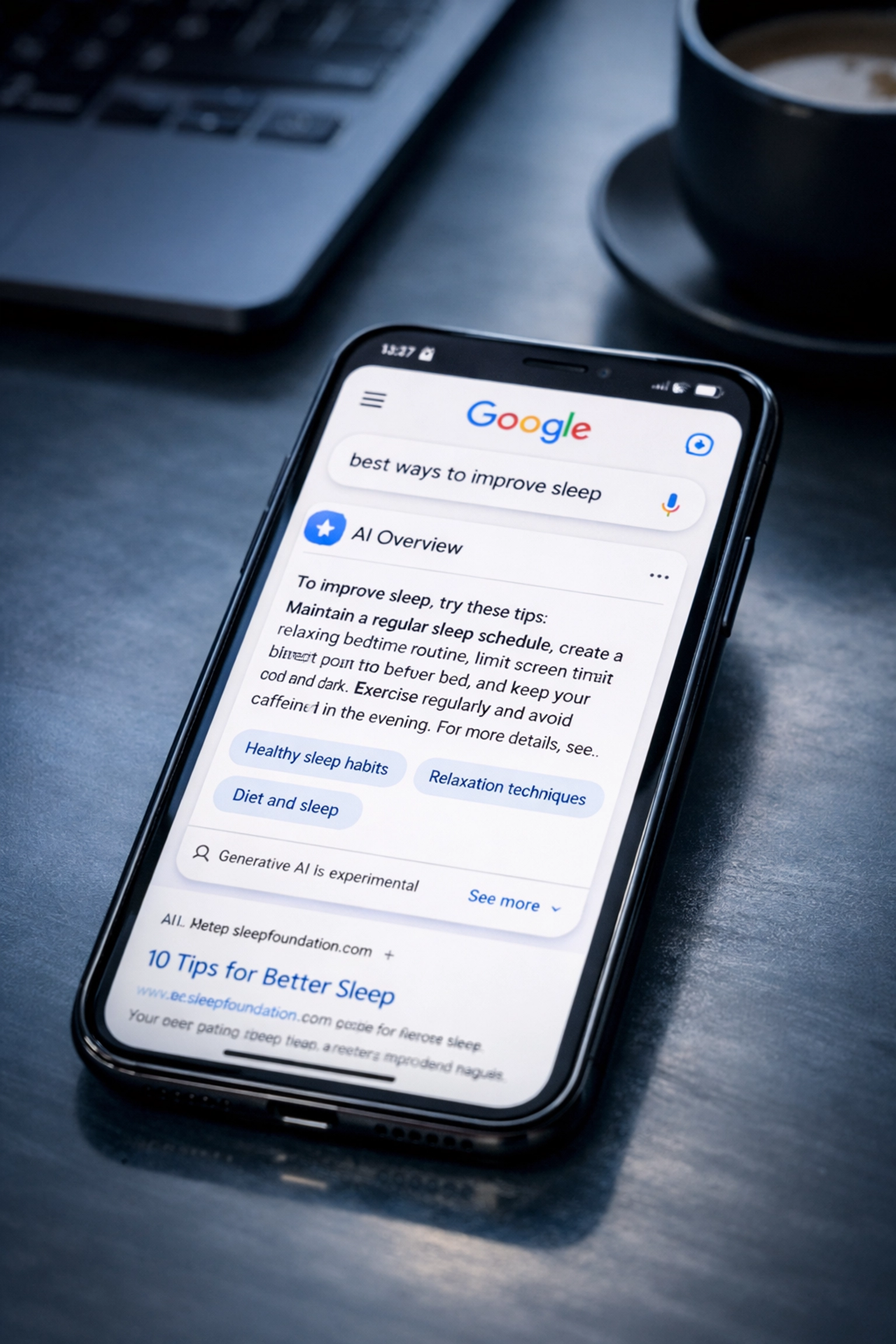
Google's AI Overviews now appear at the top of search results, synthesizing information from multiple sources and answering questions before users even click through to your site.
The problem? If your content isn't cited in those AI-generated summaries, your organic click-through rates can drop by as much as 61%. Users get their answer right there on the search results page: they never make it to your website.
The Fix: Optimize your content so Google's AI actually pulls from your site. Use structured data and schema markup, especially FAQ schema. Format your content with clear headers, concise answers to specific questions, and authoritative language. When AI systems scan for information to include in overviews, they prioritize well-structured, credible sources that directly answer user queries.
Mistake #3: Writing for Algorithms Instead of Humans
You've stuffed your blog with keywords. Every sentence reads like it was written for a robot, not a person. And guess what? Google's "Helpful Content" updates specifically target this approach.
Search engines now prioritize "people-first" content: writing that genuinely helps readers, not content designed solely to manipulate rankings. If your blog sounds robotic, lacks personality, and doesn't connect with real-world problems, it's getting buried in search results.
The Fix: Start every blog post by asking, "Would this actually help someone in my target audience?" Write like you're explaining something to a colleague over coffee. Include real stories, practical examples, and conversational language. Your content should answer questions thoroughly while remaining engaging and readable.
Need help creating content that balances SEO with genuine value? Check out our SEO services designed specifically for businesses that want to rank without sacrificing quality.

Mistake #4: Using the Same Generic Prompts as Everyone Else
When you type "Write a blog post about digital marketing trends" into an AI tool, you're getting the same output as thousands of other marketers typing similar prompts.
This creates a massive duplicate content problem. Sure, the wording might be slightly different, but the ideas, structure, and key points are essentially identical. Google sees through this, and your content gets lost in a sea of sameness.
The Fix: Get specific with your prompts. Instead of asking for generic content, instruct the AI with detailed parameters: your target audience, specific pain points, unique angles, your brand voice, and the exact outcome you want readers to achieve. Then: and this is critical: substantially edit and enhance what the AI produces. Add proprietary insights, original research, or perspectives from your team that no AI could generate on its own.
Mistake #5: Skipping Authority and Expertise Signals
AI-generated content often lacks one crucial element: demonstrated expertise. There's no author bio, no credentials, no evidence that a real human with actual experience wrote (or at least edited) the piece.
Google's E-E-A-T principles (Experience, Expertise, Authoritativeness, and Trustworthiness) matter more than ever. Content without clear authority signals struggles to rank, especially in competitive niches.
The Fix: Always include author bylines with credentials. Reference your team's real-world experience. Cite credible sources and link to authoritative studies. Share original data, client results, or lessons learned from your own work. These signals tell both Google and readers that a knowledgeable human created (or at least verified) this content.
Mistake #6: Targeting Single Keywords Instead of Building Topic Clusters
Here's an outdated approach: Write one blog post targeting one keyword, then move on to the next keyword. Rinse and repeat.
This strategy doesn't work anymore because AI search tools and Google's algorithms now favor comprehensive topic coverage over isolated keyword targeting. Users are asking more complex, nuanced questions, and they expect thorough, interconnected answers.
The Fix: Build content clusters around core topics. Create a pillar page that covers a broad subject, then develop supporting articles that dive deep into related subtopics. Interlink these pieces strategically. This approach signals topical authority to search engines and provides a better user experience. Instead of scattering single posts across random keywords, you're building a knowledge hub that positions you as the go-to resource in your niche.
Mistake #7: Prioritizing Speed Over Quality
The appeal of AI content is obvious: you can pump out blog posts in minutes instead of hours. But when speed becomes your only metric, quality suffers: and so does your SEO.
Publishing low-value content quickly won't move the needle. In fact, Google may flag unedited AI posts as spammy or low-quality, actively hurting your rankings rather than helping them.
The Fix: Slow down. Focus on publishing fewer pieces of genuinely valuable content rather than churning out daily posts that nobody wants to read. Edit ruthlessly. Add multimedia elements like original images, videos, or infographics. Break up text with subheadings, bullet points, and clear formatting. Make your content scannable, comprehensive, and worth the reader's time.

The Bottom Line: AI Is a Tool, Not a Replacement
Generic AI blogs are killing SEO: but only when businesses treat AI as a replacement for human creativity, expertise, and strategic thinking.
The companies winning with AI content are using it strategically: for research, for outlining, for identifying content gaps and internal linking opportunities. They're not publishing unedited drafts. They're adding unique insights, demonstrating expertise, and creating content that serves real human needs first and search algorithms second.
If your current content strategy involves copying and pasting AI outputs directly to your blog, it's time for a reset. Google's algorithms are only getting smarter at detecting generic, low-effort content. The question isn't whether AI will hurt your SEO: it's whether you're using it in a way that helps or harms your rankings.
Your content should establish authority, answer real questions, and provide value that generic AI tools simply can't replicate on their own. That's how you build sustainable organic traffic in 2026 and beyond.
Ready to Fix Your Content Strategy?
At PulsebitAI, we help businesses create SEO-optimized content that actually ranks: no generic AI fluff, just strategic, results-driven content that connects with your audience and climbs Google's rankings.
Get in touch with our team:
Website: https://www.pulsebitai.com/
Office: 312-598-9163
Phone: (214) 882-4303
Email: support@pulsebitai.com
Let's build a content strategy that leverages AI without sacrificing the quality and expertise your audience deserves.
